Setting Effective Revenue Targets for Profitable Growth

setting effective revenue targets for your company

Recently, we posted an article on the top reasons why companies miss their revenue targets: Not setting effective revenue targets at all; Low quality of sales pipeline; Insufficient size of sales pipeline; Low closing ratios; and slow conversion of sales to revenue.

In this article, we will explore in some depth the first of the five reasons: Not setting effective revenue targets.

It has been our experience that the degree to which CEO’s are directly involved in setting effective revenue targets and how much effort and time senior management spends on this critical issue make the difference between meeting revenue targets consistently and missing them more often than not. This becomes more apparent as we investigate the process for effectively determining and defining the:

  1. Ideal growth rate for your company over the next 1-2 years
  2. Key Market Segments
  3. Foundational targets for each segment
  4. Operational numbers and metrics
  5. Schedule (Timing) of these Numbers
  6. Right Type and Amount of investment required
  7. Organization-wide commitment necessary

We will discuss each of the above in some detail next.

Determine the Growth Rate to Set Your Effective Revenue Target

We believe that the first mistake many companies make is in what they choose as their benchmark revenue year. Most automatically set their previous year’s revenue as the new benchmark. Others set a rolling average of the past three or five years.

Our recommendation is that a company should always use its highest historical revenue year as the benchmark, regardless of when that occurred or what special circumstances led to that.  Such a policy re-enforces a mindset that if a company was able to achieve something once, not only can it achieve it again, but can also surpass it next time.

With the benchmark set at the highest historical revenue, the next step is to decide the rate of increase over that revenue base to discover your effective revenue target.

For discussion purposes, let’s say that a Company ABC did $50 million in its best year some years back, and the executive team decided to surpass that by 20% this year, or target $60 million in revenues.

Define Key Market Segments

Most companies sell a wide variety of products to a wide range of customer. At the same time, they tend to see these customers as  a single large market.

We can usually tell that a company sells to a number of different market segments when we tend to get ambiguous answers to simple questions. For example, when we  ask, “What is your average selling price?” and the response is, “It depends. It can vary anywhere from $10,000 to $500,000”; or “What is your average sales cycle?” and we hear responses like, ”Well that depends too. It can vary from 3 months to 24 months…” we know the customer base is made of more than one segment.

This typically happens because, initially, the company built a capability aimed at a specific group of customers, but later sees that the same capability can be sold to more customers outside of the original customer group. From the company’s point of view, it is essentially the same capability. However, customers use that capability for different purpose, have different levels of need for it (for some it is mission critical while for others it is back-up, and still others use it for convenience), and even different buyer roles. Hence the wide range of average sales price, sales cycles, and closing ratios.

A firm should to be able to confidently say, “For customer group A, we will target our average deal size to be X, and our average selling cycle to be Y, and our closing ratio to be Z”. Segmentation of its market is the key to such precision.

SOMAmetrics helps companies analyze their data and arrive at clear segmentation of their market.

Determine the Foundational Targets for Each Segment

The next task is to set the foundational targets for each market segment. Below is a sample list of foundational assumptions:

 Segment A B C Total
 Targeted Revenue ($) 30,000,000 22,000,000 8,000,000 60,000,000
 Avg. Selling Price ($) 100,000 50,000 10,000 53,333.33
 Avg. Sales Cycle (months) 9 6 4 6.33
 Avg. Closing Ratio25%20%30%25%
 Sales needed 300 440 800 1,540
 Sales Qualified Leads needed 1,200 2,200 2,667 6,067


From the above chart, the company knows it will need 1,200 sales opportunities or Sales Qualified Leads (SQLs) for Segment A in order to reach its $30million effective revenue target based on a $100K average sales price and 25% closing ratio.

The question here is where will these 1,200 new SQL’s come from.

Determine Operational Numbers

For most b2b companies, revenue has long lead-time measured in months if not years. The longer the sales cycle time, the more a company must frequently track and know its operational numbers so it can make adjustments early enough to make any difference.

Revenue is the final output that results from the interactivity of number of chained input factors. Before revenues happen, many other output factors must happen—each with its own interacting chain of events.

The tough part is usually getting the right quantity and type of the input factors at the right time at each link of the chain. For example, if the company doesn’t get the right amount of SQL’s, it will not make enough sales to reach its effective revenue target. SOMAmetrics uses the Four Funnels Framework to manage these operational numbers.

Traditionally, companies try to reach their SQL numbers with the combination of leads sent from Marketing, and sales reps doing their own phone prospecting. The hope is that somehow, from these two activities, the sales reps would generate their own Sales Qualified Leads to stoke their sales pipelines.

Both of these approaches tend to have shortcomings. Marketing should and will generate leads. However, there is very little to indicate whether these leads are hot, warm, or cold. It now becomes the sales reps responsibility to first determine that before proceeding.

At the same time, most sales people we know hate making cold calls and avoid doing so. They are even reluctant to call on leads provided by Marketing because many of these are rather cold.

Contrast that with a professional Teleprospector who actually loves making 60-90 dials a day, sees it as a challenge to break into an account, find the decision maker, engage her in a two-minute conversation to get her attention and interest, schedule a call with the sales rep, and then moves on to the next call.

Now, this is very different. This is a warm or even hot lead and the sales rep will jump on it, preferably within the next 48 hours.

The ideal best practices would be for Marketing to send warm leads to the professional Teleprospector whose main job now is to qualify these warm leads and makes sure it is a Sales Qualified Lead before passing on to the sales rep. Now, sales reps have a steady, well-stocked pipeline of qualified prospects on which to call at any given time.

Assuming that only 10% of the leads that Marketing provide turn out to be Sales Qualified Leads (SQL’s) ready to be passed on to sales reps, then the company must generate five (5) Marketing qualified Leads for each SQL.

The completed operational numbers look like this:

 Segment A B C Total
 Targeted Revenue ($) 30,000,000 22,000,000 8,000,000 60,000,000
 Avg. Selling Price ($) 100,000 50,000 10,000 53,333.33
 Avg. Sales Cycle (months) 9 6 4 6.33
 Avg. Closing Ratio25%20%30%25%
 Sales needed 300 440 800 1,540
 Sales Qualified Leads needed 1,200 2,200 2,667 6,067
 Marketing Qualified Leads needed 12,000 22,000 26,667 60,667
 Marketnig Impressions needed 600,000 1,100,000 1,333,333 3,033,333


Are you setting effective revenue targets? Download this checklist to find out

Determine the Scheduling of Operational Numbers

Now that we have determined the Operational numbers the next step is to make sure the right amount of the right type of numbers are available at the right time. This is about scheduling or timing, and probably where many companies lose control over their revenue targets.

Marketing has its own lead-time. Prospective customers will likely need to see quite a bit of a company’s message before they start doing anything about it.  Teleprospectors typically have to make several calls into a company before they reach a decision maker. These two cycles together can take up anywhere from six to twelve weeks before a Sales Qualified Lead emerges from a given campaign.

Also, personal selling is a labor-intensive process. It takes a certain time out of each day for a sales rep to make a sales call on a prospect, send out a summary letter and next step statement, arrange for demos and other proofs, prepare proposals, and take care of any other steps necessary to turn a prospect into a customer. Also, depending on the closing ratio, this must be done with many prospects in order to produce one customer.

What typically happens is that activities tend to be done in bunches rather than steady streams. Marketing spends months preparing for a large campaign, launches it, collects a ton of leads, and then sends to the reps. However, the reps can only call on so many leads at any given time. The rest get cold and hard to work with.

Scheduling the Operational numbers means that marketing campaigns go out on a regular schedule feeding Marketing Qualified Leads to the Teleprospecting team, which feeds Sales Qualified Leads to the sales team on a regular basis.

The SOMAmetrics Four Funnels Framework is designed to ensure proper operational scheduling.

Determine The Right Amount and Type of Investment Required to Reach Effective Revenue Targets

As many executives know, revenue is not free. It is typically purchased—either through acquisitions, hiring of more sales reps, increased marketing presence, or some combinations of these. To earn more revenue, a company will likely need to spend more.

But more importantly, it needs to make the right spending decisions.

One thing we come across often is that companies believe that if they hire more sales reps, then they will build more revenue. They justify this saying that they need the “presence” and that hired sales reps will also be required to prospect their own leads.

We question this line of reasoning. Our experiences tell us that most sales reps do not like to prospect and will likely not be productive unless they have a full pipeline of well-qualified leads to work on. The company has just added to its fixed cost without really looking at the return on that investment.

We believe that there is significantly better return on investment when a company reallocates its budget to Teleprospecting activities, thereby significantly increasing the productivity of its smaller sales team.

In the example below, the first column shows the cost of a single sales rep assigned to the fictional Segment A we looked at above. The rep has a base salary of $60k/year, which comes to $72k/year when fully burdened. The rep sells $900K of goods per year and earns $90K in commissions. This brings his total selling cost to $162K/year, and the net contribution to the company is now $738K for the year.

Lets assume that there are five sales reps assigned to Segment A and their totals are shown in the second column.

 Sales Rep (Quantity) 1 5
 Base Salary ($) 60,000 300,000
 Burden20%20%
 Total Cost ($) 72,000 360,000
 Commission10%10%
 Avg. Sales/year ($) 900,000 4,500,000
 Commission paid ($) 90,000 450,000
 Total direct sales cost ($) 162,000 810,000
 Total contribution ($) 738,000 3,690,000

Next, let’s explore a different sales strategy.

Let’s say we want to determine what would happen if the company let go one of the reps and instead utilized the services of a professional Teleprospector. At this point, the company released $162K per year it would have paid to the fifth sales rep, but also lost the $900K it would have received from that rep, or net negative of $738K that year it would need to get somehow to come to par.

 Teleprospector Fee ($) 96,000
 SQL/s per month 8
 SQL’s per year 96
 Avg. Pipeline ($) 9,600,000
 Deals 24
 Revenue ($) 2,400,000
 Commissions to sales reps 240,000
 Total contribution ($) 2,064,000

The new numbers are dramatically different. We paid the Teleprospector $96K and obtained about 8 Sales Qualified Leads each month, or 96 for the year, resulting in a sales pipeline of $9.6 million. Recalling that the closing ratio for Segment A was 25%, this pipeline converted into $2.4 million in sales.

The company was able to realize 267% increase in revenues by better utilizing the remaining four sales reps, since they were adequately fed quality pipeline by the single Teleprospector.

The company spent an extra $24K and increased its revenue by an additional $1.5 million ($2.4million-$900k). That is a 6300% return on that extra $24k—a smart investment.

While there is a point of diminishing return here as in all things, this example illustrates how companies can significantly increase revenue by shifting their costs to where they can get better return on the same dollars spent.

Make the Commitment to Reach Your Effective Revenue Targets

The analysis has been done, and the plan has been written and re-written.

What is left is the commitment to make the hard decisions, choices, and changes necessary to execute the plan and reach your effective revenue targets. It is always hard to make changes. People are affected by change, and many people have been with the company for a long time.

Conclusion

None of the steps outlined are easy or quick and dirty. They will likely take weeks of planning, sharing notes and ideas, and careful preparation to ensure that the management team has fully thought through the steps and stands confidently behind the numbers. And, in the end, act decisively and boldly.

Sales Pipeline Development by SOMAmetrics

A Sales Saybook is what Your SDRs Need.

There is a significant difference between a Sales Playbook and a Sales Saybook, as we will discuss in some detail below. But, to quickly give you the key differences… A Sales Playbook is a complete discussion of how a company plans to go to market with its various products to achieve very specific sales goals.
Read More »
Hidden Competitors

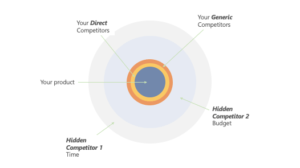
Two Hidden Competitors your SDRs face every day

There are two hidden competitors that stall sales pipeline development more than any other—and they are not the ones you are probably thinking of. In fact every company, every product, faces these two hidden competitors. You can’t escape them. Not only that, they are the first barrier you face—before you encounter any of the competitors

Read More »
SOMAmetrics sales pipeline strategy

How to drive Predictable Revenue growth with a Radical Sales Pipeline Strategy

One of the first things we look at when working with a new client is their sales pipeline strategy. And, we are often surprised at how inadequate their sales pipeline strategy is. All the more surprising because these are typically highly experienced sales leaders. Don’t get me wrong—their sales strategies are detailed, well-thought-out, and comprehensive.

Read More »
High quality sales pipeline

Building High Quality Sales Pipeline

NOTE: Read this ONLY IF your team is having difficulty consistently hitting their quotas. The number one factor that affects the ability of sales leaders to hit their numbers is high quality sales pipeline. In fact, as the sales pipeline goes, so does revenue growth. Sales leaders that focus on building high quality sales pipelines

Read More »

Seven Reasons why Companies miss Revenue Targets

Over the past 20 years of working with some 100 small and medium sized companies, we have found that the top six reasons why companies miss their revenue targets are:

  1. Not setting Valid Revenue Targets
  2. Poor quality of sales pipeline
  3. Insufficient size of sales pipeline
  4. Bad fit between What you sell and the Sales Team’s skills
  5. Poorly Defined Sales Structure
  6. Misuse of Sales Quotas and Sales Incentives
  7. Slow conversion of Contracts to Revenues

Some of these are quick fixes. Others may take some time to address.  We also recommend that companies tackle this issue in the order listed above, as some are interlinked and are prerequisite steps to the next.

1. Not setting Valid Revenue Targets

Yes, this one surprised us too, but many CEO’s and their executives don’t clearly know what revenue targets they want to achieve. When we ask, “What is your revenue target for this year?” some say they don’t know; others answer vaguely; still others give inconsistent numbers from one executive to another within the same company.

Even when companies do set revenue targets, the question is whether these are valid. A valid revenue target is one that has its foundation in data. It is composed of what is possible, but it stretches the company to live up to its full potential.

Recommended Solution

The first criterion for A Valid Revenue Target is that it is based on data. You must first do the analysis necessary to know what is possible. You should look at the various products you sell, then set different targets for your customer base versus new customers. They add all of these to come up with the total for the company.

2. Poor quality of sales pipeline

The next reason for missed revenue targets is low quality sales pipeline. This means that sales people are engaging prospects that are not likely to buy anytime soon, for a number of reasons. Poor quality of sales pipeline shows itself primarily in two ways:

  1. Deals that don’t close (low closing ratios), and
  2. Deals that don’t close for a long time (long sales cycles)

Both of these are symptoms of poor quality sales pipeline and they typically manifest together. The end result is a Sales Organization that works hard to produce little and is demoralized.

Of these two, the second is a bigger problem. Companies seem to accept the delay as being their “sales cycle”. When we ask our prospects, “What is your average sales cycle?” we get responses such as, “Well, that depends…” or “It varies anywhere from 3 months to 18 months…”, and other similar responses. Such ambiguity regarding sales cycle length tends to indicate poor quality of the sales pipeline, rather than indicating the true sales cycle period.

There are many reasons why a company may have a large but poor quality sales pipeline.

The first is that marketing leads are being passed straight to Sales people without being properly qualified, and the Sales Reps begin working all of them in the order they are received, rather than in quality-prioritized way. So, the Sales organization may be working hard, but it is not producing much.

The second reason is that marketing leads may be qualified by a telemarketing team, but the company thinks that this is an entry level job and hires very junior people to qualify leads. What typically happens in this case is that these junior telemarketers prospect to their own comfort and skill level—i.e. junior level people in the prospective company—rather than to real decision makers. Then they pass these as “qualified” leads to the Sales Team. Sales Reps will find out that these are not the right prospects ONLY after they talk to these “qualified” leads. Again, Sales works hard, but not smart.

Recommended Solution

The cure to poor quality Sales Pipeline is diligently using the Four Funnels Framework.

SOMAmetrics Four Funnels Framework
  • Use a Teleprospecting team to further Qualify the Marketing Qualified Leads before passing them on as Sales Qualified Leads (SQLs)
  • Don’t have your Teleprospecting cold call to find SQLs. This is very slow, very expensive way to prospect. Instead, market continuously to your target market and pass on warmer leads or Marketing Qualified Leads to further qualify.
  • Have a healthy mix of marketing campaigns designed to interest both decision makers and line managers so you have the business line managers recommending you, and the decision makers finding sufficient business return to make the purchase decision.
  • Use the Four Quadrants to guide your Marketing and Sales efforts. Marketing and selling to your existing customers is very different from marketing and selling to non-customers. And, even getting existing customers to buy new products requires a different kind of marketing and sales than asking them to buy more of what they already buy from you.

Some Additional Quality Points

Teleprospecting is the Quality Assurance (QA) “department” when it comes to Sales and Marketing. Just as companies would test their products to make sure they are of sufficient quality before bringing them to market, so must companies check the quality of the leads before passing them on to Sales.

It is also important to understand that Teleprospecting is NOT an entry-level position. It is a business process that requires very skilled and experienced telephone sales professionals who have the competency and confidence to talk to senior level decision makers.

If a company is not using experienced Teleprospectors to qualify the marketing leads before passing them on to Sales, then the company is probably wasting money paying junior level people to do a very difficult and sophisticated work.

Download the diagnostic checklist to see why you may be missing your revenue targets

3. Insufficient size of sales pipeline

The next reason why companies fail to achieve their revenue targets is because they don’t have sufficient size of sales pipeline.

If Sales reps do not get sufficient number of Sales Qualified Leads (SQLs), then they tend to start thinking “scarcity” rather than “abundance”. Insufficient Quantity then becomes Poor Quality (Reason #2 above) as Sales Reps start hanging on to opportunities they know will not close, trying to artificially inflate the size of their pipeline.

And almost just as bad, even when reps close any of these leads, they tend to have done so by offering deep discounts, since they cant walk away from tough negotiators.

Any sales rep afraid to lose anything on his or her pipeline exudes that fear and will be quick to either offer or agree to a deep discount. Experienced buyers can smell that fear and wring out price and other concessions before agreeing to sign the contract.

The worst of this is when a shrewd negotiator uses one of your sales reps to provide him with a low price quote, which he then takes to the vendor he had chosen all along to get a better price from that vendor.

Recommended Solution

The solution is to keep the Sales pipeline stocked with sufficient size of well-qualified sales leads. This process starts with reverse engineering the numbers to arrive at the required size of the pipeline, starting from the sales target.

Let’s say your target is to achieve $25 million in new sales and your average sales price is $25,000. That means you will need to close one thousand (1,000) new deals to achieve this revenue target, on average.

If your average closing ratio is 20%, then you will need five times as much in sales pipeline, or about $125 million in sales pipeline.

Obviously, you have to build that pipeline throughout the year. Without adjusting for seasonality and/or ramp-up period, this assumes that you would need to build roughly $31.2 million in new sales pipeline each quarter, or roughly $10.5 million each month.  We highly recommend that you pad this pipeline by another 20% to ensure that you will achieve or exceed your revenue target.

4. Bad Fit between What You Sell and Your Sales Team’s Skills

Assuming that you have set valid sales targets, and that you have provided your Sales team with sufficient size of high-quality sales pipeline, why would you miss your revenue targets?

Often, companies simply grow their sales force by hiring anyone they consider to be a “closer”. After all, that is what a Sales Organization is for—to close deals. So, what could be wrong with hiring more “closers”?

The problem with this is similar to a hospital hiring anyone who is a licensed MD. Sure a hospital needs doctors, but how many doctors of what kind are needed? A heart surgeon is not the optimal substitute for a kidney ailment, and an Optometrist can’t fill in for a podiatrist.

In the same way, a closer is not a closer. A talented sales rep who always blew her numbers selling $200,000 complex enterprise solutions will struggle to sell $500 licenses. A sales rep  that is a genius at explaining very complex concepts simply and getting the sale, will struggle selling simple products that don’t need much explanation. The top sales guy at a construction company selling construction projects will flounder selling a consulting service to the construction industry.

Simply because a sales reps resume said she did over $1 million in sales selling for her previous company doesn’t mean she can do it for your company—unless the sales skills required are a match.

Recommended Solution

The solution is to always hire the right skills for the right job.

The Prospecting Myth – understand and accept that Prospecting and Selling are two different but related phases of making a sale. The work is very different. Prospectors make 60 or more calls a day in the hopes of connecting with maybe 4-5 people a day and hopefully getting one Sales Qualified Lead a day. The Teleprospector is on the phone all day long, never meeting anyone, and hardly leaving her desk except for short breaks here and there.

Sales reps, on the other hand, are great at building rapport and engaging prospects—once they have them in a meeting. Sales reps don’t do well with a 30 second conversation. They are far better at a 30 min to 2-hour conversations.

Far too often, we see companies hiring sales reps to do their own prospecting and justifying this by saying, “That’s what the base salary is for…” It may sound like smart use of money, but it is actually the opposite. It is a waste of money because the end result is a highly frustrated and unproductive sales rep.

The “Selling is Selling” Myth – selling is NOT selling. Selling cars is very different from selling homes. Selling homes is very different from selling enterprise software to the global financial services firms. Selling telephone headsets is different from selling telephone equipment, which is different from selling telephony services.

There are many differences in the sales of each of these. The work ethics is different. Some require lots short, low-priced transactions as in sales of cars. Others require skill in simplifying complex concepts and reducing them into easily provable business benefits. Still others require the ability to talk to very senior people in large global companies, while others require talking to the foreman of a construction project.

Where one skill was the key to success can become useless in another.

  1. Always determine what kind of skill you need for a given role, then how many of that role you need to fill. Don’t start hiring until you do.
  2. Then interview very carefully to make sure you have found the right candidate.
  3. Lastly, put in place the early flags that will tell you whether you have hired the right person or not, much sooner than later.

5. Poorly Defined Sales Structure

Having identified the right sales talents and having hired them, it is critical to place them in the right roles. Too often we see those with very good service instincts required to hunt, and those with very good hunting skills required to nurture and grow accounts. Again, these are very different types of skills and personalities and your company will likely need both. Just make sure you place the right person in the right role.

It will be very difficult for you to achieve your revenue targets if you don’t properly optimize the structure of your Sales Organization to align with the intended prospects.

Recommended Solution

Define your Sales Organization according to the Four Quadrants of High Growth

https://www.somametrics.com/wp-admin/post.php?post=4484&action=edit
SOMAmetrics Four Quadrants – click to enlarge
  1. Quadrant 1 is the domain of the Hunter and the Teleprospector. You need a professional Teleprospector to find the right door into the account, and the Hunter to find a way to get into that door. Don’t waste the Hunter’s talents in finding the door. Assign a skilled Teleprospector for each Hunter—even one Teleprospector 2-3 hunters is a much more cost-effective organizational structure. And don’t look for service-oriented people to do a hunter’s work. In Quadrant 1, impatience is the virtue, and you need professionals that consult and then tell the prospect it is time to make a buy decision.
  2. Quadrant 2 requires light selling and heavy marketing. Therefore, you can use junior level order takers in training to be hunters or account managers. Their job is to assist customers in ordering more.
  3. Quadrant 3 requires significant account management and relationship building skills. Make sure you place a service oriented sales rep who enjoys working with her accounts to determine what they need and when, and gradually increase the size of each of her accounts. In Quadrant 3, Patience is virtue.
  4. Quadrant 4 is pure New Business Development. You need someone with an entrepreneurial spirit, someone who likes to go where no one has gone before (at least in your company). The challenge here is to find the first key customers that don’t mind being the first to use your products in quite that way. And each of these have to be total success so you can obtain the reference-able customers necessary to get more. At some point, you will start adding your Hunter-Teleprospector team from Quadrant 3 so as to get more customers, and this new market will need to be segmented into three other quadrants.

The Four Quadrants of High Growth provide a highly effective way of segmenting markets enabling you to create the right territory assignments that are a fit for the appropriate sales roles and talents.

6. Misuse of Sales Quotas and Sales Incentives

One of the worst understood and often misused sales management tools is a sales quota. The first and worst offender is having different sales quotas for different sales people, not because they sell different products and/or to different customers, but because they just bring in different levels of sales.

As an example, one company we work with set their target for new incremental revenue to be $10 million. While we couldn’t see how they arrived at that number, other than a straight increase over the previous year’s $9million, that was not the real issue

The real issue is how they decided to allocate “quota” to the team. The company has six sales people. Management first announces the incremental revenue target and then announces the “quotas” for each rep.

  • Their top producer was to bring in $4.8 million of the $10 all by herself—or 45% the new revenue
  • Three other reps had their quotas set to $1.5 million (15% each)
  • The last two were assigned half a million each, or 5% of the revenue.

When we asked if these six reps sell different products or to different customers, the answer was “No, they all sell the same thing…”

The reason the first sales rep was expected to sell nine times as much as two others was only because she was good. So, she was being punished for being a great sales rep by having her quota raised, yet once again.

Using quotas in this way is punitive to your best people, possibly forcing them to look for less stressful position in another company, while allowing your worst performers to continue to perform at a low rate with no repercussion. Obviously this is not what you want.

The Right Approach to Setting Quota

The appropriate use of Sales quota is to establish the floor or minimum of what a sales rep must bring in to justify the expense of keeping that sales rep on the payroll. In the example above, since the company would never let go of their top sales rep, then the continual raising of the quota would only drive this rep away due to the intense stress that creates.

The right approach would have been to set a quota of, say $400,000 which means that if any has trouble meeting this number, then it is not cost-effective for the company to keep this rep and should let her go.

Also, quotas should be exactly the same for all reps who sell the same thing in equivalent markets or sales territories. Otherwise, you can expect a sales rep to think it unfair if his or her quota is higher than others who are selling the same product(s) in an equivalent territory. The above-mentioned Four Quadrants provide a systematic methodology for assigning selling territories for a given sales role.

The right Way to Incentivize Reps

Quotas should never be used to incentivize sales reps to produce more.

The right way to incentivize sales reps to produce more is to give them financial incentives to do so. Now that you have set quotas for the minimum productivity you need to justify the cost of keeping a sales rep on the payroll, the rest is to provide a combination of commissions, short-term rewards, and recognition to drive productivity.

Rather than having a straight commission rate no matter how much a sales rep sells, provide a variable one that increases every time a sales rep achieves a new sales production level.

Lets illustrate these two improvements over the bad practice of misusing quotas to try and increase sales productivity.

Scenario 1- Misused Quotas

In this scenario, a company pays a straight 7.5% commission on sales. The company also has also awarded different quotas to their sales reps as indicated above, with the top rep struggling to make $4.5 million in sales. The two least productive sales reps each are told to achieve $500,000—which they may or may not achieve, and it is not clear what would happen to them. In fact, these two sales reps typically bring in around $300,000.

Scenario 2 – Proper Use of Quotas and Variable Commission rates

In this case, the company has the same quota for all sales reps selling the same products in equivalent territories—say $300,000. If any sales rep brings less than that, then the sales manager will have to seriously consider letting this sales rep go and look for a better-suited sales professional.

Commission rates are 5% for achieving quota ($300,000); then 6% for sales of $301,000 to $400,000; then 7% for sales of 401,000 to $500,000; then 8% for sales of $501,000 to $700,000; then 9% for sales of $701,000 – $900,000; and 10% for sales over $900,000 to $1.2 million; and so on.

Let’s see the effect of this variable commission rates on those two least productive sales reps.

  • Under the old model, if the sales rep sold $300,000 she would make. The increase in commission to get this rep to sell $301,000 is another $75 only.
  • Under the second model, this rep will see a jump in commission of $3,060 for selling one more $1,000 because of the 1% increase in commission on ALL $301,000.

For sales level of $401,000:

  • Under the first scenario, sales rep will earn $7,575 in additional commission compared to sales on $300,000
  • Under the second scenario, the sale rep will earn $13,070 more (because of the 2% increase in commission over the entire $401,000).

What we have done differently is that both our stick and our carrot are stronger and clearer in the second scenario. Sales people could lose their job if they produce under $300,000 and the upside for them for continually increasing their productivity is significantly higher under the second scenario. Both are hard to ignore for any sales rep.

The key is to first determine how much of revenue you are willing to allocate to compensating your sales force, and then designing the commissions to incentivize increased sales productivity.

7. Slow conversion of Contracts to Revenues

If your company cannot invoice a customer until certain conditions are met, and you have significant time lags in meeting these conditions, then you will likely miss your revenue targets, even if the “booked” revenue is equal to or exceeds your revenue target.

For publicly traded companies, this is a legal requirement that must be met to recognize revenue within the specified accounting period. However, even for a private company, pretending a deal is closed when the signing of the contract is contingent upon the deliver of conditions within a specified time frame is a recipe for missed revenue targets.

  • At best, the customer simply will not pay until all conditions are satisfied—and though you will receive the funds at some point, this puts significant cash-flow strains on your company.
  • Even worse, the customer will get out of the contract if you don’t satisfy the conditions and you will have wasted significant resources to get a contract without receiving any funds in return.
  • Far worse would be if that customer was upset enough to give your company bad reviews. Then future prospects might be skeptical about signing up with you.

Recommended Solution

The first step is to monetize this issue so you know how much money you are not collecting as a result of the time lag between signing a contract and delivering what is expected so you can invoice the customer.

If your business model is a recurring revenue model where customers pay a certain amount each month, each month that you have not yet delivered is what you are forgoing.

As an example, let’s say you charge $5,000 a month and it takes you roughly 60 days to get a new customer to be ready to be invoiced. That means that you have foregone $10,000 due to this delay. Let’s say on average you close five such deals a month. That means, on average each month, you are losing about $50,000 in opportunity costs (money you could have earned that you are not).

Next, let’s say you figured out a way for cutting the time from 60 days to 30 days. That means you are now saving $25,000. Therefore, you can spend up to $25,000 each month to reduce this to 30 days and it would be a wash from a cash-flow perspective.

However, the real gain comes with increased new customer satisfaction—customers want to start seeing the benefits of their purchases as soon as possible. After all, that was the reason they decided to buy. Therefore, speeding up the process of realizing the benefits would significantly increase customer satisfaction.

If you can get customers to write great reviews, agree to be references, and in other ways provide you with positive testimonials, then this will go a long way in enabling your sales people to close more deals in shorter time.

Conclusion

Your company may not have all of these issues. However, if you are having difficult meeting your revenue objectives, it his highly likely you have at least one of the above seven challenges.

Having worked with over 100 companies, SOMAmetrics has developed the tools, resources, and expertise to help your company overcome the challenges that prevent you from consistently achieving your revenue targets.

The first step is to conduct an Assessment of your company to determine which of the above challenges you may be facing, and what the root causes are. The next step would be to look at some options of how to address these challenges and begin to consistently achieve your revenue objectives.

SOMAmetrics provides a one-week assessment service that enables you to quickly identify where the bottlenecks are in achieving your revenue targets and develop viable options to address this.

Please contact us today to determine how we may be able to help.

How the “Care Factor” Impacts Revenue and Your SQL Pipeline

Two people talking over coffee

When I was VP of North America Teleprospecting at a $3B Global IT Solutions company, I managed a team of 40+ Teleprospectors based in the US, EMEA and AsiaPac. Our job was to feed quality Sales Qualified Leads (SQLs) to the 1500 person Field Sales team. Our focus was Global2000 companies with budget to purchase solutions in the $250K-$2M range. Typically our calls were with CIO/CTO’s, VP’s of Development/IT, etc. Each Teleprospector was to generate, on average, 8-10 highly qualified SQLs each month. Our annual SQL to sales pipeline quota was $7.5Million per Teleprospector.

After the first few months in this position I noticed a strange cycle that occurred at the end of every month and especially at the end of every quarter. What happened, at these times, was that the SQLs from our department were completely ignored by the Sales team. The worst time was at the end of every quarter, when SQLs would not be called until some 15 days, or longer, after they were passed to sales.

My managers and I started to track this cycle, which we called the “Care Factor”. We dubbed it so, because Field Reps were very interested (cared) in SQLs during the first month of every quarter and they ignored SQLs during the last week of every month. During the last month of the quarter, after the 15th day, the Field wouldn’t touch any new SQL at least for a few days after the quarter ended. This was often as long as 2 full weeks after the SQL was passed. By now, the SQLs were stale. Stale SQLs require requalification.

The Care Factor impacts revenue in several ways:

  • Constant requalification of leads is a waste of limited resources. Most companies, including our, don’t have enough Teleprospecting horse-power to support their sales organization. Rather than going after new prospects, we were regularly required to re-qualify solid SQLS that had already been contacted and previously qualified. Thus preventing a steady stream of new SQLs to Sales.
  • The SQL-to-pipeline quota was impacted and delayed.
  • Field teams delay in follow-up can give prospects the impression that your company is not responsive. Many of our SQLs were with C-Level Executives who took the time to answer the Teleprospectors questions and/or gave us the right person to contact. The delayed response made our company look bad because of the slow follow-up by sales. I have heard, from clients, that many of their deals were lost due to lack of Sales responsiveness.
  • Growth of the Sales Funnel is hampered, as quality SQLs are delayed. In some cases, SQLs won’t make the funnel because of the delay in follow-up. The delayed funnel growth has a direct impact on when deals will close.

We had a SQL follow-up rule in place for the Field. SQLs needed to be contacted within 48 hours. There wasn’t one Regional VP of Sales who cared about this rule at the end of the quarter. Our company, like most, suffered from the ”hockey stick” factor; a few deals close at the beginning of a quarter while most deals are closed at quarters end (spiking up, like a hockey stick). The “hockey stick” factor caused the Field to be super busy with trying to pull in revenue. They had no time to reveiew potential opportunities (SQLs). The combination of these 2 factors “hockey stick” and low interest (Care Factor) create a vicious cycle that impacts pipeline and revenue growth.

I have yet to find a company who has vanquished the “hockey stick” factor. From my perspective this hockey stick sales pattern implies that deep price discounts are being offered at the end of the quarter in order to meet quarterly quotas, which in turn, trains customers to wait until quarter end to buy. Here are a couple of suggestions for managing the”hockey stick” factor:

  • Following up with SQLs, quickly throughout the quarter, helps to build a larger sales pipeline, consistently, throughout the year. When more opportunities are in the sales pipeline, more opportunities are available to be closed, throughout the year, not just at quarter end.
  • Conducting a financial analysis to see whether deals were won or lost, each quarter, by utilizing deep price discounts. If Sales Reps use a strong sales methodology like Power Base Selling or Solution Selling to build need and create pain, they should be able to close deals anytime and without utilizing discounting as a sales method.

My solution to the “Care Factor” problem is this. Each Regional Sales Office should assign one person to review SQLs, as they come in. SQLs should go to the Sales Rep who has the bandwidth to work the deal, at the time the lead is passed over. It is far better for your company to be responsive to the needs of your prospects than to let quality SQLs slip away or to stall, due to lack of timely follow-up. If you must, create a commission sharing model to keep the peace amongst your Field Reps. In the end, your company will build quality sales pipeline and a lot faster. The Teleprospecting resource will be utilized efficiently, as time will be spent garnering new SQLs, vs. re-qualifying old SQLs. The benefit to your company will be a consistent flow of opportunities to your sales pipeline which will mean more revenue, each and every quarter.

Read our blog on why your SQL’s get ignored at the end of every quarter.